
If you're hosting a casual party, a game-day buffet, Thanksgiving, or a holiday crowd, keeping food hot without drying it out can be one of the trickiest parts of entertaining. Below are 10 practical ways to keep food warm, including options with and without electricity.
This post contains affiliate links. Click on my disclosure to find out more!
Affiliate disclosure: As an Amazon Associate I earn from qualifying purchases.
Food safety first: Hot perishable foods should be held at 140°F (60°C) or above, and cold foods at 40°F (4°C) or below. If food is not being held hot or cold, FDA and USDA guidance uses a 2-hour limit at room temperature (1 hour when the air temperature is above 90°F). Use a instant-read food thermometer to verify the actual food temperature instead of relying on touch or a warmer's dial. An instant-read thermometer works especially well for buffets because you can quickly spot-check several dishes instead of leaving a probe in one pan.FDA buffet guidance notes that some warmers only hold food at 110–120°F, so always check both the equipment and the food.
Does your buffet table need some help? Check out our tips for setting up a beautiful and practical buffet table for any event.
This post contains affiliate links. Click on my disclosure to find out more!
Jump to:
- FAQ's
- What is the cheapest way to keep food warm for a party?
- 10 Ways To Keep Appetizers Warm
- 1. Chafing Dishes
- 2. Electric Food Warmers
- 3. Thermal Cookers
- 4. Coolers
- 5. Use Thermal Insulated Bags
- 6. Heat Lamps
- 7. A Slow Cooker/Crock Pot
- 8. Use A Thermal Cooker
- 9. Aluminum Tins
- 10. Your Home Appliances
- Foods That Reheat Well
- Final Tips For Keeping Food Warm
FAQ's
What is the cheapest way to keep food warm for a party?
Use Your Oven:
- Use the oven's Warm setting or a low oven. FDA buffet guidance suggests about 200-250°F for holding backup hot dishes before serving, but the important number is the food itself: keep it at 140°F or above.
- Place dishes in oven-safe containers and cover them with aluminum foil.
- Crock-Pots/Slow Cookers:
- Transfer food into a slow cooker and set it to the "warm" setting.
- Chafing Dishes:
- Consider renting chafing dishes with heating elements beneath the food pans.
- Electric Warming Trays:
- Place dishes on electric warming trays and adjust the temperature.
Insulated Food Containers:
- Use insulated food bags, coolers, or containers to keep food warm.
- Wrap dishes in towels or use hot packs for added insulation.
- Aluminum Foil and Towels:
- Wrap dishes in aluminum foil to retain heat.
- Place wrapped dishes in an insulated container or cooler, surrounded by towels.
Buffet Set-Up:
- Arrange hot dishes close together on the buffet to help keep each other warm.
- Use insulated serving dishes or trays.
Boiling Water Method:
- Place hot dishes in a larger container and fill gaps with boiling water to maintain temperature.
Stovetop Simmering:
- Keep certain dishes warm on the stovetop over very low heat.
- Use a diffuser if necessary to avoid direct heat.
Frequent Reheating:
- If you are serving in small batches, keep the backup food refrigerated and reheat each batch rapidly to 165°F before putting it into hot-holding equipment.
10 Ways To Keep Appetizers Warm
Serving cold food that SHOULD be warm is my ultimate fear when hosting a party. Unfortunately, keeping food warm for hours is NOT easy, especially when you have a crowd of people who are arriving at different times and eating throughout the party OR if you want to transfer food to another location.
You have temperature safe zones to consider plus the fact that food easily dries out over time the longer it's heated.
Since food, in my opinion, is the MOST important thing at a party, I wanted to share some valuable advice with you that I have learned so you don't make the same mistakes I've made!
Catering your party? Here is a list of appetizers perfect for catering!
Below I am sharing techniques caterers use to reheat foods and keep foods warm with and without electricity. Most are pretty simple and can be replicated at your next party whether it's indoor or outdoor!
Keep in mind, many of these tips may require purchasing items or equipment so think about what makes the most sense to purchase, what is the best investment for your future parties and most importantly, what works within your budget!
If you have company over more than once a year, investing in a good set of durable food warmers is one of the BEST investments you will make! They are worth every penny. Plus, they look nice and can allow you to set the food out way before the party starts! Stress-free entertaining? I'm all in!
1. Chafing Dishes
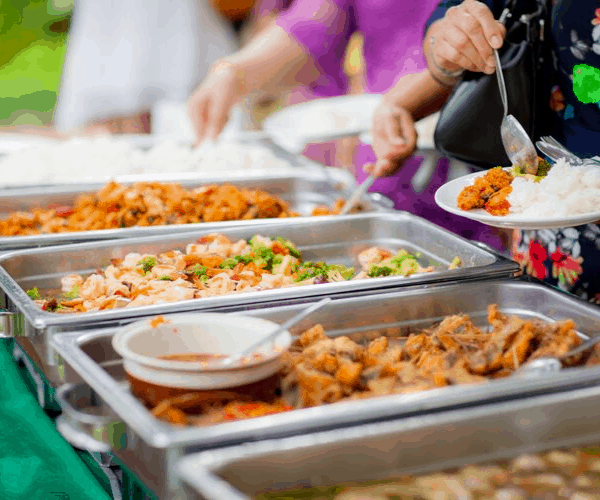
There's a reason this is the most popular type of food warmer! Chafing dishes are simply portable catering pans that sit over top of a frame or tripod. Water is poured underneath and then the water is heated using small flames like sternos. Check out my top chafing dish picks!
Chafing dishes are one of the best choices for a buffet because they are designed to hold already-hot food at a safe serving temperature. Standard fuel-heated chafers do not require electricity, but you still need enough space for safe setup and ventilation.
You can purchase inexpensive aluminum ones that will do the trick or invest in fancier ones that will last a lifetime. Either way, if you're hosting a party that where the food is served buffet style, this is the best option!
2. Electric Food Warmers
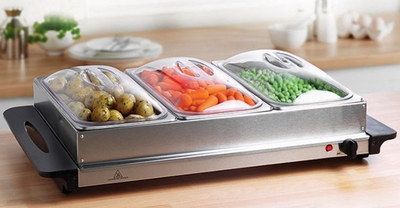
➡️This electric warmer (shown below) is my FAVORITE! Everyone that comes over my house tells me how much they love these and end up buying one.
Electric food warmers are awesome. They do not require any water or flames and are much easier to set up. The one con is that they require electricity to run. So you have to take the cost into consideration as well as the location where you want to set them up.
IMPORTANT! I did not realize when I purchased these food warmers how short the cords are. So make sure to grab some three prong extension cords!
Stainless Steel Warming Tray & Buffet Server
Because of the small trays, this one is perfect for warming sides or appetizers. The lids are clear so you can see through them plus they have a stand to place the lids on while serving yourself.
My favorite thing is the warming tray itself. You can remove the buffet trays and expose one single warming tray that is flat. This is great for placing casserole dishes on or foods you want to slightly warm while crisping the bottom like breads or finger foods.

Electric Slow Cooker With Triple Mini Crock Pots
These mini crock pots are awesome for serving dips or sides. They are ideal for a taco bar or any food bar where you want to heat multiple sides or toppings at once. IT really is such a fun warming station that does not take up much space.
3. Thermal Cookers
Thermos' are not just for your kid's lunch! They are great for keeping food warm for HOURS without needing any electricity or flame making them perfect for soups, stews or sauces. Best of all, they pour easily so they're ready to serve!
Thermal cookers are amazing. To use one, you do NOT need any electricity. It uses the insulated heat and keeps your food hot for many hours. Read more about how they work here.
This thermal cooker is one of the best out there. Stainless Steel Vacuum Insulated Thermal Cooker.
4. Coolers
Yes! Coolers can be used to keep foods HOT too!
You probably think of ice when the word cooler comes into mind but what we may forget is that coolers are great for insulating anything whether its cold OR hot.
What the pro's use:
You can turn your cooler into a HOT BOX or a 'Cambro'. Caterering companies use a Cambro all the time for weddings or large events.

How To Use A Cooler to Keep Food Warm For Hours:
A preheated insulated cooler can help retain heat during transport, but there is no fixed number of hours that is automatically safe. The food still needs to stay at 140°F or above. Check it with a food thermometer when you arrive and before serving; if it has dropped below safe hot-holding temperature, reheat it properly before serving rather than assuming the cooler kept it safe.
What you want to do is heat water up in a large pot on the stove. Then add the water to an empty cooler and let it sit for at least 5 minutes. This will bring the cooler's internal temperature up so when you place the food in, the cooler will not "steal" heat from the food. Then, when your ready to start insulating, pour out the hot water.
To properly insulate, line the cooler with heavy duty aluminum foil followed by a few towels. This will add extra insulation to the cooler. Then wrap your containers or dishes fully with more aluminum foil and a towel and place neatly inside the cooler with extra towels snuggled around the food so it does not shift or allow air flow.
*Keeping the lid closed until ready to serve the food will keep the heat in longer!
This cooler is one of the top rated coolers out here.
Three ways to add even MORE heat to your cooler next to your towels:
- Water Bottles: An extra way to maintain the heat in a cooler is to use water bottles. Just add very hot water to any water bottle you have in your house and close it up. Lay them around the sides, bottom and top of the cooler.
- Rice or Beans: Add some rice or beans to some large socks and tie them in a knot. Place them in the microwave for a few minutes or until hot. Place under and around your food. Rice and beans hold heat very well and are a cheap alternative to adding heat to your cooler.
- Skip improvised heat sources: Do not put oven-heated bricks or other improvised heating elements into a household cooler. Use a food-rated insulated carrier or a commercial hot pack designed for food transport instead, and verify the food itself remains at or above 140°F.
Be careful stacking your food in a cooler! If you want to warm multiple dishes, you'll need to stack your food. To do this, use an empty cardboard box and cut a piece of cardboard as wide as the cooler.
This will be a make-shift 'shelf' to place the food on. OR, you can purchase these oven-safe casserole dishes which have sturdy lids allowing you to stack them easily without a mess!
5. Use Thermal Insulated Bags
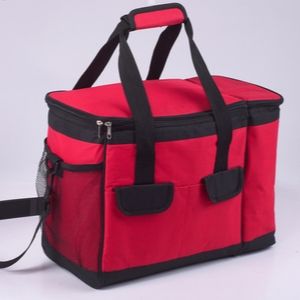
Using coolers is a GREAT way to keep food warm for hours! These are great for both at home and traveling! They are easier to carry then large coolers and do a great job insulating food! You can use the same strategies I mentioned above to help lock in as much heat as possible.
For transport, place already-hot food in covered, heat-safe containers, wrap the containers well, and pack them tightly into the insulated bag to reduce heat loss. When you arrive, check the food temperature before serving; an insulated bag slows cooling, but it does not guarantee the food stayed at 140°F or above.
6. Heat Lamps
Heat lamps can help keep small, shallow foods warm and crisp for short periods, which is why they are common in food service. But a lamp is only a safe hot-holding method if the food itself stays at 140°F or above. Check with a thermometer; do not assume the surface feeling hot means the center is being held safely.
7. A Slow Cooker/Crock Pot
Most of us have slow cookers (or crock pots) already however we don't think about using them to keep food warm for parties.
You can use a slow cooker to hold already-hot food for a party as long as the food stays at or above 140°F. It is a holding appliance, not the best way to bring refrigerated leftovers back up to a safe temperature. Here are some tips for using one at a party:
- Add food to the slow cooker already hot. If it was cooked earlier and refrigerated, reheat it to 165°F on the stove, in the oven, or in the microwave first, then transfer it to the preheated slow cooker for holding.
- If your food is already cooked, make sure to set your slow cooker to the 'WARM' setting so the food does not over-cook.
- Have a place to put the lid! It is hard to juggle a plate, spoon and a lid at once. Plus, we all know how much condensation forms on the inside of those lids so if guests are helping themselves, have a clean dish towel nearby for them to lay it on.
- Triple mini crock pots are so great for warming sides, dips or sauces! These here are beautiful!
8. Use A Thermal Cooker
A thermal cooker, also known as a thermal pot or a vacuum pot, is a fantastic appliance for keeping food warm for an extended period without using electricity. Here's how to use a thermal cooker to keep food warm:
- Prepare the Food: Begin by cooking your food as you normally would, ensuring that it's thoroughly heated or cooked to your desired temperature.
- Preheat the Thermal Cooker: Fill the inner pot of the thermal cooker with boiling water. This step is crucial to preheat the pot and ensure it's hot before adding your food. Allow the hot water to sit in the pot for a few minutes, then pour it out.
- Transfer the Hot Food: Place the hot or freshly cooked food into the inner pot of the thermal cooker. Ensure that the food fills the pot as much as possible to minimize heat loss.
- Seal the Pot: Close the lid of the inner pot securely to create an airtight seal. Some thermal cookers may have a locking mechanism to ensure a tight seal.
- Insert the Inner Pot into the Outer Pot: The thermal cooker consists of an inner pot and an outer pot. Insert the sealed inner pot into the outer pot. The outer pot is designed to have excellent insulation, which will help retain the heat.
- Leave it Undisturbed: Once the inner pot is placed inside the outer pot, do not open the thermal cooker for the duration you want to keep the food warm. Opening the cooker will release the heat, reducing its effectiveness.
- Wait for the Food to Stay Warm: The insulation of a thermal cooker can retain heat for an extended period, but safe holding time depends on the model, how full it is, the starting temperature, and how often it is opened. Do not rely on a fixed number of hours—check the food with a thermometer and keep it at 140°F or above. This makes it an excellent tool for keeping food warm while you prepare other dishes, travel, or serve meals later.
- Serve when Ready: When you're ready to serve, open the thermal cooker, remove the inner pot, and dish out the hot food. Remember that the food will be at or near the temperature it was when placed inside the cooker.
9. Aluminum Tins
Aluminum tins or foil containers are CHEAP and can be quite effective at keeping food warm, especially when used correctly. Here are some steps to help you use aluminum tins to keep your food warm:
-
Choose the Right Container:
- Select an aluminum tin or foil container that is appropriate for the quantity and type of food you want to keep warm. Make sure it has a tight-fitting lid to seal in heat.
-
Prepare the Food:
- Cook or heat your food to the desired temperature before placing it in the aluminum tin. Hot food will stay warm longer than food that's lukewarm.
-
Use Foil or Plastic Wrap:
- To ensure a tight seal and prevent heat from escaping, cover the top of the aluminum tin with a layer of aluminum foil or plastic wrap before placing the lid on.
-
Fill the Container:
- Carefully transfer your hot food into the aluminum tin. Leave some space at the top to avoid spillage and to allow for the expansion of steam.
-
Seal the Lid:
- Securely close the aluminum tin with its lid. Ensure there are no gaps or openings that could allow heat to escape.
-
Wrap in Towels or Blankets:
- To enhance insulation, you can wrap the aluminum tin in clean towels or blankets. This will help trap heat and keep the food warm for a longer period, especially during transportation.
10. Your Home Appliances
Take advantage of what you already have in your home.
The Oven!
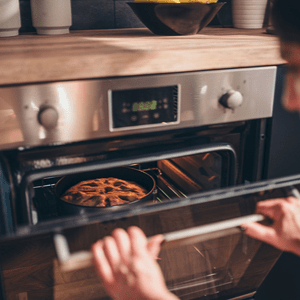
This is one of the most POPULAR ways people like to keep food warm! It's free and does not require too much added effort! The 'warm' setting is about 200ºF. If you don't have a 'warm' setting, just set your oven's temperature to this setting and wrap food in tin foil before you place it in your oven. Don't set the temperature too high, or leave your food in too long or it will dry out! Aluminum foil will prevent the food from drying out too much so make sure to use some.
Tip* The warm setting temperature for your oven in Celsius is about 93ºC.
Your Toaster Oven!
Toaster ovens are great because they heat up much quicker than a regular sized oven! If your using one, set the temperature to the lowest 'BAKE' setting. This way your food wont burn or dry out. Toaster ovens are perfect for keeping items warm like bread, small appetizers or even dips!
Plan In Advance What Time Food Will Be Served
Time and temperature both matter. The food-safety "danger zone" is 40°F to 140°F, where bacteria can multiply rapidly. Perishable food should not spend more than 2 total hours in that range, or more than 1 hour when the surrounding temperature is above 90°F. The clock is a limit on total time out of temperature control—not a guarantee that bacteria only begin growing after two hours.
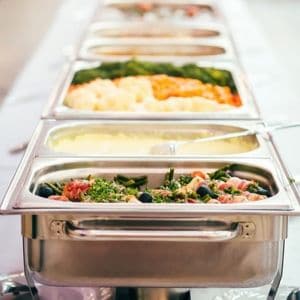
With that said, it is important to determine how long your food will be left out without heat.
Two hours is not a long time so if you're serving a sit-down dinner, you want to keep the food over 140ºF until last minute and serve the food directly from the oven straight to the table.
If you're serving food buffet style, it is easiest to have food out the entire party so everyone can continue to help themselves throughout the day or night. If that's the case, you will need to make sure your food has time to heat up before guests help themselves and will stay heated until the end of the party.
Do not use a chafing dish to reheat cold food. Chafers are for hot holding. Cook or reheat the food first, then transfer it to the preheated chafer while it is already hot. USDA guidance says previously cooked leftovers should be reheated to 165°F before being moved to hot-holding equipment.
TIP* Starting with HOT water underneath your dish and using larger sternos are both smart tricks to get your food warmers ready faster!
And always, ALWAYS have backup sternos ready to go when one goes out!
Use a Quick-Read Food Thermometer
Use a quick-read thermometer from the start of service and check the food periodically. You do not need to wait 2-3 hours. The thermometer is what tells you whether a chafing dish, warming tray, slow cooker, cooler, or oven is actually keeping the food at a safe hot-holding temperature.
If a hot dish drops below 140°F, don't rely on a stronger Sterno flame to slowly warm it back up. If it has been below 140°F for less than the allowable time, reheat it rapidly to 165°F using the stove, oven, or microwave, then return it to properly preheated hot-holding equipment. If you cannot verify how long it has been out of temperature control, the safer choice is to discard it.
Planning game day or a tailgate? Pair this guide with our football watch party ideas and football party finger foods. For any gathering, our party appetizer guide has more make-ahead serving ideas.
Foods That Reheat Well
Here are some of my favorite recipes that can be kept warm for hours without drying out or getting soggy!
22 Mini Sandwich Ideas (Party Appetizer Sliders)
11 Meatball Appetizers Using FROZEN Meatballs
73 Shrimp Appetizer Ideas For Your Next Party
Final Tips For Keeping Food Warm
Whether a fancy soiree or a casual get-together, there are TONS of ways to keep food warm for your party. I suggest choosing the option that works best for your party and your budget or mixing up hot and cold foods.
Whatever you decide, keep in mind that most of what you purchase is an investment and will pay off in lack of stress alone.
Knowing your food is being served warm at a safe temperature is worth every penny in my opinion.
?If you have other ways YOU keep food warm at your parties, I'd LOVE to hear them. Please share in the comments below!

Andy loks
Would love to try this out
Martin Goodnews
Thanks for the great party tips!!
Ekene
Thank you so much. I consider this tip a healthy practise
efemena
thank you for your article
efemena
I have been looking for this kind of information for over some time and I love your detail in your site its helpful and nice keep up your good work.
Aleka Shunk
thank you! happy entertaining!
Bright
Your article is nice and I really want to thank you for sharing this post as it contains a lot of details, keep up this good work.
Bright
What an extremely excellent post you got here. I really want to express my gratitude for this post as it contains a lot of information that has been very helpful.
Casey
Great article, but some proofreading is needed?
Aleka Shunk
Thank you Casey! I will go back through it! 🙂
Avwunudiogba Oghenekevwe
i love the work you are putting on your website.your content on food is so cool that i think i have not been eating good food.
i will be visiting your site more frequent thank you
Dotun Ajibola
wow this article is well informative and constructive. thank you It was worth the reading.